The biggest headline at Farnborough didn’t come from a flashy order board. It came from what Boeing chose not to do. The company dialed down the sales theater and talked factories, rate plans, and quality gates.
In plain English, Boeing is putting the grind first. Executives said the priority is to build more 737s, build them better, and only then worry about making a splash with orders. That tone landed just as a new 737 line lit up in Everett and another triple-digit MAX deal hit the tape.
So yes, orders matter. But output, right now, matters more.
The Big Picture: Production Over Pageantry
Farnborough is usually where airframers tally wins like sports scores. This year, Boeing’s message flipped the script. Ahead of the show, Boeing Commercial Airplanes CEO Stephanie Pope said the company is focused on increasing and improving aircraft production, not order announcements. That was a deliberate reset of expectations around the 737 program’s near-term goals, and it framed the week’s news even as fresh deals came through the door.
When backlogs stretch into the next decade, the strategic currency is delivery reliability, not press releases.
Three things changed the conversation. One, Boeing opened the 737 “North Line” in Everett, signaling extra capacity for the MAX family and reiterating that the backlog is more than 4,000 aircraft, with deliveries booked well into the 2030s (Boeing). Two, the company reported 129 737 deliveries in the second quarter of 2026, a figure that helps anchor what “stability” looks like on paper (Boeing Investors). And three, regulators gave a nod in May for Boeing to move to 47 aircraft per month on the 737 line, though leadership is clear they will pace that climb carefully (Aviation Week).
Why Stability Comes Before Sales Pitches
What the CEO actually said
Stephanie Pope’s pre-show briefing was direct. The focus is on increasing and improving aircraft production, not on order announcements that play well on day one but do nothing for delivery slots in 2027. In other words, the company knows its credibility is tied to output, quality, and predictable handovers more than it is to another slide with logos (Aviation Week).
Why this stance hits now
The industry is in a weird place. Airlines still want narrowbodies for growth and replacement. Lease rates have tightened. Crews and slots are scarce. At the same time, shop floors and supply chains are digesting years of disruption. Promising more jets without the muscle to deliver them only pushes the pain downstream. Choosing stability is not just optics, it is survival.
What “stability” means in practice
On a line like the 737’s, stability is about rate discipline, parts flow, and defect reduction. It’s the difference between sprinting to 47 per month just because regulators signed off, and building the scaffolding that holds at 47, then 50, then whatever comes next, without burnouts or backslides.
Everett’s New 737 North Line and the Math of Backlogs
The Everett “North Line” is the loudest physical signal that Boeing intends to grow 737 capacity. The line officially opened on July 10, and the company underscored a MAX backlog exceeding 4,000 aircraft that stretches today’s plans into the 2030s (Boeing).
What the numbers say
You do not need to be an ops nerd to get the shape of the challenge. Even with regulator approval to reach 47 jets a month, clearing more than 4,000 aircraft will take years, not quarters. Q2’s 129 deliveries show momentum, but they also highlight how tight the runway is for catch-up if anything slips (Boeing Investors).
| Program marker | Status / figure | Source |
|---|---|---|
| 737 MAX backlog | More than 4,000 aircraft, deliveries into 2030s | Boeing |
| New Everett 737 “North Line” | Opened July 10, 2026 | Boeing |
| Q2 2026 737 deliveries | 129 aircraft | Boeing Investors |
| Approved monthly rate | Up to 47 aircraft per month (May 2026 approval) | Aviation Week |
Why Everett matters
Adding the North Line gives Boeing redundancy and elbow room. It helps decouple learning curves between lines, reduces single-point bottlenecks, and creates space to rework airframes without choking the primary takt. That is the dry, unglamorous stuff that actually moves a backlog.

Regulators, Rates, and Realistic Ramps
There is a natural temptation to celebrate regulator approval to reach 47 per month as if it flips a switch. It does not. Approval is permission, not capacity. Boeing has been explicit about moving at a measured pace, and that is the only route that holds.
The work between “approved” and “achieved”
- Audit the supplier base for part yield, schedule adherence, and rework rates. You can only move as fast as the slowest tier two.
- Harden quality gates, especially on fuselage joins, systems integration, and cabin installs. Fewer defects equals more flow.
- Stabilize workforce shifts and training, so tribal knowledge sticks and first-time quality climbs.
- Buffer critical spares and tooling, so a single missing element does not stall an entire section.
- Coordinate with regulators on data visibility, because predictable reporting reduces surprises later.
The headline is simple. Ramping rates is not about pushing a button. It is a thousand small constraints being relieved in the right order over months.
Farnborough Orders Still Landed, But the Optics Changed
Even with the “production first” mantra, orders did not vanish. On day one at Farnborough, SMBC Aviation Capital signed for 100 737 MAX jets, split 60 737-10 and 40 737-8. It is a big, clean vote of confidence from a top-tier lessor, and it keeps the skyline full for the larger MAX variant (PR Newswire).
Orders vs outcomes
Here is the real shift. Boeing is not centering the order book in its narrative, even when it has something sizable to show. Executives are saying the quiet part out loud. The backlog is already massive. New deals are great, but they are not the bottleneck. The bottleneck is the rate, the rework queues, and the confidence of regulators and customers that the plan is real.
Why lessors still lean in
Lessors like SMBC buy delivery slots as much as they buy airplanes. With replacement cycles rolling and global traffic holding up, demand for narrowbody lift is durable. Locking in positions now secures flexibility later, and in a world where availability is the scarcest commodity, that flexibility is a tradeable asset.
What It Means for Airlines, Lessors, and Suppliers
Airlines
If you are an airline planning fleet growth, the message is patience with a payoff. A steadier rate means fewer late changes and less schedule chaos, but it also means near-term slot scarcity. Expect tighter delivery windows, more swap negotiations, and a premium on flexibility. The flip side is better on-time handovers when your slot finally arrives.
Lessors
For lessors, today’s environment rewards those with early positions and diverse lessee pipelines. New orders like SMBC’s are not just size for size’s sake. They are about being the allocator of last resort when airlines cannot get line slots. Expect active secondary trading of slots and more power in lease negotiations, as long as you can match deliveries to creditworthy demand.
Suppliers
Suppliers live in the gray zone between approvals and reality. Rate 47 is the ceiling regulators have allowed, not necessarily the floor for stable output. That means careful capex decisions, workforce hiring that can flex, and a hard look at quality metrics that drive scrap and rework. If you are a tier two, this is the time to prove you can be the constraint-breaker, not the constraint.
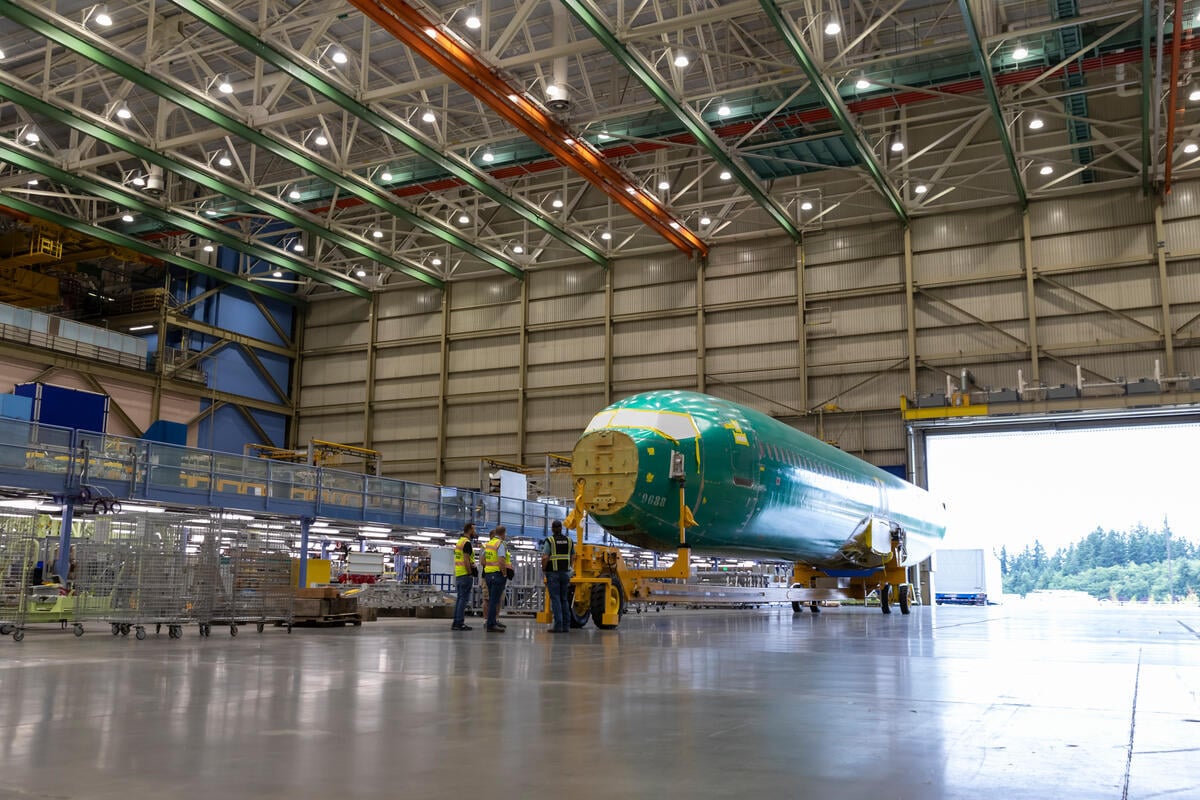
Photo (July 10, 2026) of a 737 fuselage entering Boeing’s new Everett “North Line,” illustrating the factory expansion that underpins Boeing’s focus on ramping 737 output rather than prioritizing airshow order announcements. — Source: Boeing
Outlook: What to Watch Over the Next Year
The Everett North Line will be the visible proxy for whether Boeing can grow 737 output without shaking loose quality. A few markers are worth tracking.
Quarterly delivery cadence
Use Q2’s 129 737 deliveries as a baseline. We are not looking for moonshots. We are looking for a clean, stepwise climb, quarter on quarter, with fewer delivery holds and smaller rework tails (Boeing Investors).
Line-to-line consistency
If Renton and Everett show converging first-time quality and days-in-progress metrics, that is a green light for further rate discussions. If one plant becomes the catch-basin for defects, expect leadership to pause.
Supplier lead times and escape events
Listen for reductions in part shortages and fewer out-of-station fixes. The less you hear about escapes, the more likely it is that 47 per month becomes a floor, not a ceiling. Boeing has signaled caution on pushing past that threshold until the data says go (Aviation Week).
Order quality, not just quantity
Deals like the SMBC 100 are helpful, especially with a tidy split between variants (PR Newswire). But the real signal is the alignment between orders and realistic delivery positions, plus how often customers adjust or defer.
Risks & What Could Go Wrong
- Quality drift as rates rise. A few missed catches can ripple into months of rework.
- Supplier constraints on structures, engines, and avionics. One chronic shortfall can cap the entire line.
- Labor churn. If experienced crews rotate out faster than training can replace them, first-time quality suffers.
- Regulatory friction. Additional oversight or new findings could slow or reverse a rate increase.
- Variant certification or configuration changes that add complexity to the flow and soak up engineering bandwidth.
- Macro shocks that hit airline demand, financing costs, or lease rates, complicating the skyline.
Ramping is fragile. The line only moves as fast as its weakest station, and that station moves as fast as its scarcest part.
If you track industry shifts through a broader lens, outlets like Crypto Daily sometimes approach aviation stories for what they reveal about risk, supply dependencies, and execution. Different markets, same lesson set. The bottleneck is nearly always delivery.
Frequently Asked Questions
Why did Boeing downplay order announcements at Farnborough?
Because the biggest constraint is not demand. It is output. With a 737 MAX backlog north of 4,000 and deliveries stretching into the 2030s, Boeing’s leadership emphasized stabilizing and improving production over adding headlines to an already packed skyline (Boeing, Aviation Week).
What is the significance of the Everett “North Line”?
It adds capacity and flexibility to the 737 program. Opening on July 10, 2026, the line gives Boeing redundancy, room for learning curves, and space to fix issues without jamming the primary flow (Boeing).
How many 737s did Boeing deliver in Q2 2026?
129 aircraft, according to its July deliveries report. That number helps set a baseline for judging production stability in the coming quarters (Boeing Investors).
Did Boeing still announce new orders at the show?
Yes. SMBC Aviation Capital placed a firm order for 100 737 MAX jets, split between the 737-10 and 737-8 variants. The deal underscores demand from lessors even as Boeing centers production discipline (PR Newswire).
What is the current approved production rate for the 737 program?
Regulators approved an increase to 47 aircraft per month in May 2026. Boeing says it is managing that step carefully before considering any further rate moves (Aviation Week).
How long will it take to clear the backlog?
There is no precise timeline, and it depends on sustained rate improvements without quality setbacks. With a backlog over 4,000 units, the math points to years, not quarters, to meaningfully reduce it (Boeing).
Who benefits most if Boeing holds the line on stability?
Airlines and lessors benefit from more predictable deliveries, and suppliers benefit from steadier orders and fewer firefights. Boeing benefits by rebuilding trust with customers and regulators through execution, not promises.
Disclaimer: This article is provided for informational purposes only. It is not offered or intended to be used as legal, tax, investment, financial, or other advice.