Key highlights:
- Chainalysis said the 2026 World Cup generated $20 billion in the prediction market
- Over 400,000 wallets made bets during the tournament
- FIFA Collect processed $24 million in digital collectible trades
The World Cup was not just the biggest football event of 2026. It was also the biggest sporting event for prediction markets. In a new report by Chainalysis, the tournament saw a record $20 billion in prediction market trading volume from January until the end of the competition.
The report highlighted that crypto users around the world placed multiple bets on match results. Investors also used blockchain technology for digital collectibles and ticket access.
World Cup drives record blockchain betting activity
About 400,000 wallets took part in soccer betting on prediction markets, with $5.7 billion traded during the five-week tournament alone. The analysis highlighted that the World Cup bets accounted for 63% of all prediction market trading volume.
The data was tracked all the way back to January. At the time, trading activity started out with at least $50 million per day. It then climbed to $100 million during the weeks leading up to the tournament. Immediately after the tournament started on June 11, daily trading surged to $250 million.
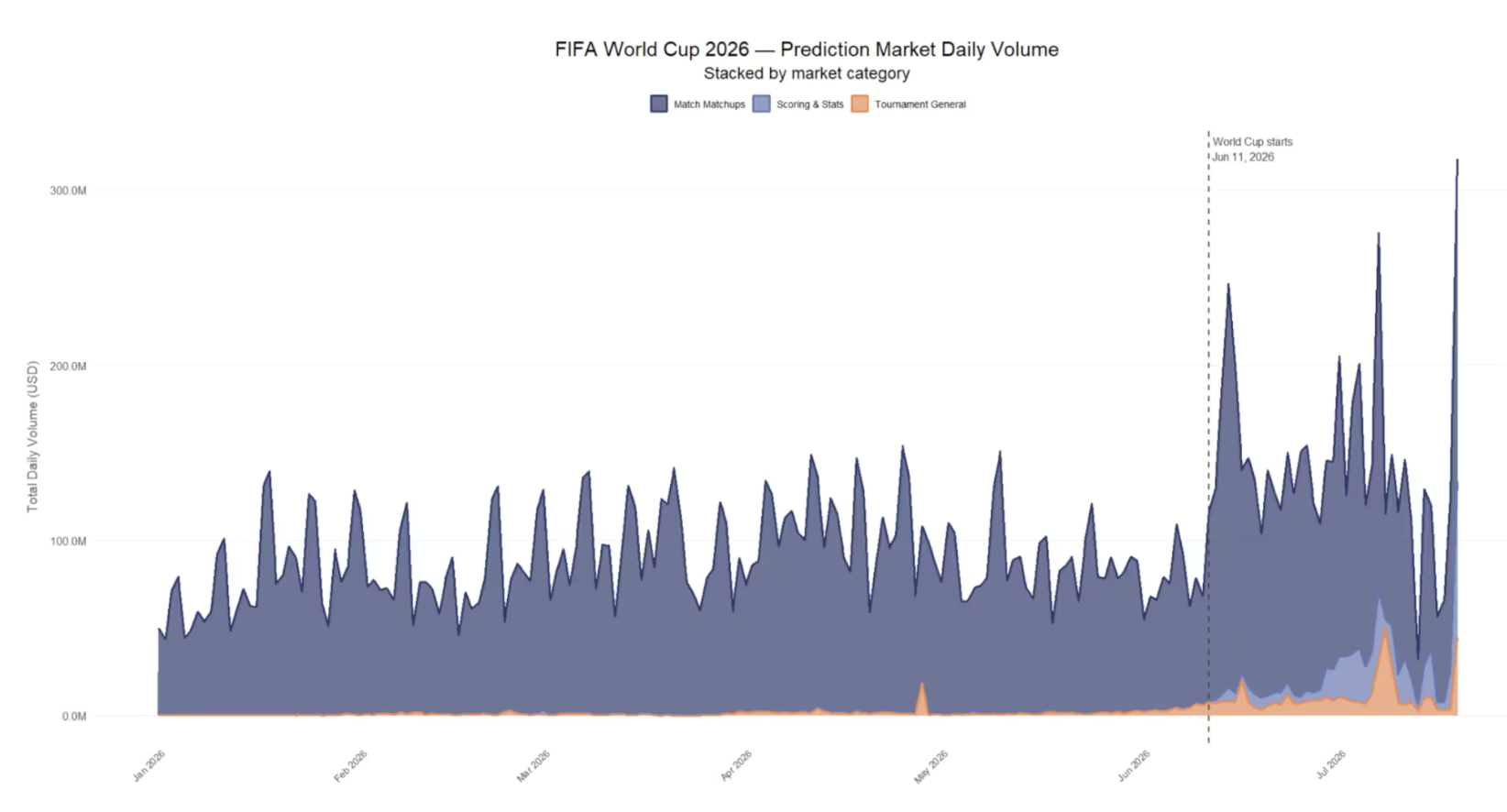
Source: Chainalysis
Its peak volume day was during the final, when Spain defeated Argentina. The prediction market volume count on that day went as high as $300 million. The United States and China saw the highest trading activity. Others include Canada, Thailand, and the United Kingdom.
The Chainalysis report also aligns with other reports that highlight the rate at which prediction markets are being adopted by investors this year.
Binance Research reported that monthly prediction market volume hit $51.6 billion in June, up 86% from January. Sports-based events generated 66% of the total volume.
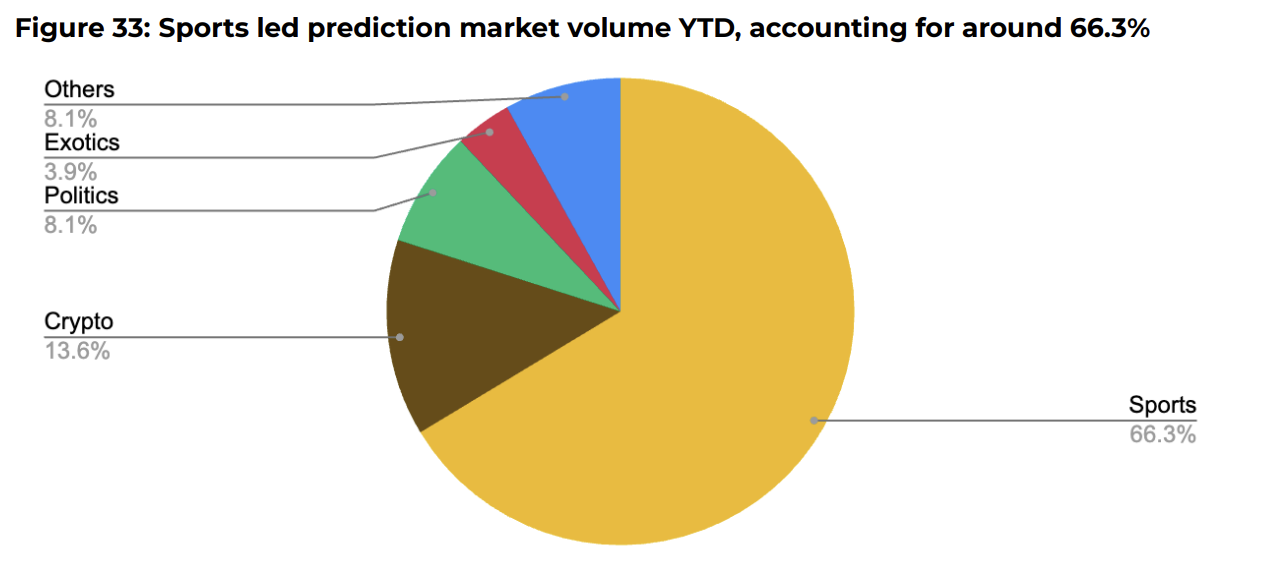
Source: Binance Research
Digital collectibles and ticket sales also gained momentum
Chainalysis found that FIFA Collect, FIFA’s official digital collectibles platform built on the Avalanche blockchain, processed $24 million in stablecoin trading from May 2025 to the end of the tournament.
Additionally, over 100,000 fans bought stadium tickets through FIFA Collect’s Right-to-Ticket products. The analytics firm said that FIFA made at least $6 million from secondary-market sales through its 5% transaction fee.
Notably, FIFA Collect recorded very little exposure to suspicious funds, unlike prediction markets. Chainalysis added that this could be due to its identity verification process and compliance checks before users could access its services.
Some wallets were linked to suspicious activity
Chainalysis identified at least 3,700 wallets linked to illicit activity. However, this was just less than 1% of all wallets that participated in World Cup prediction markets.
The biggest source of these funds was Huobi/HTX. About $5.4 million flowed into those betting wallets. Scam-linked wallets brought in around $2 million, then wallets connected to stolen crypto accounted for at least $800,000.
The company added a disclaimer that these findings were based on the wallets’ old transaction history. They do not exactly prove that these wallets were involved in illegal activity in the course of the tournament.