Crypto-focused Telegram communities in South Korea spent last week fixated on a familiar theme: the accelerating ‘institutionalization’ of digital assets—driven as much by Washington policy debates as by Wall Street experimentation with tokenized traditional finance.
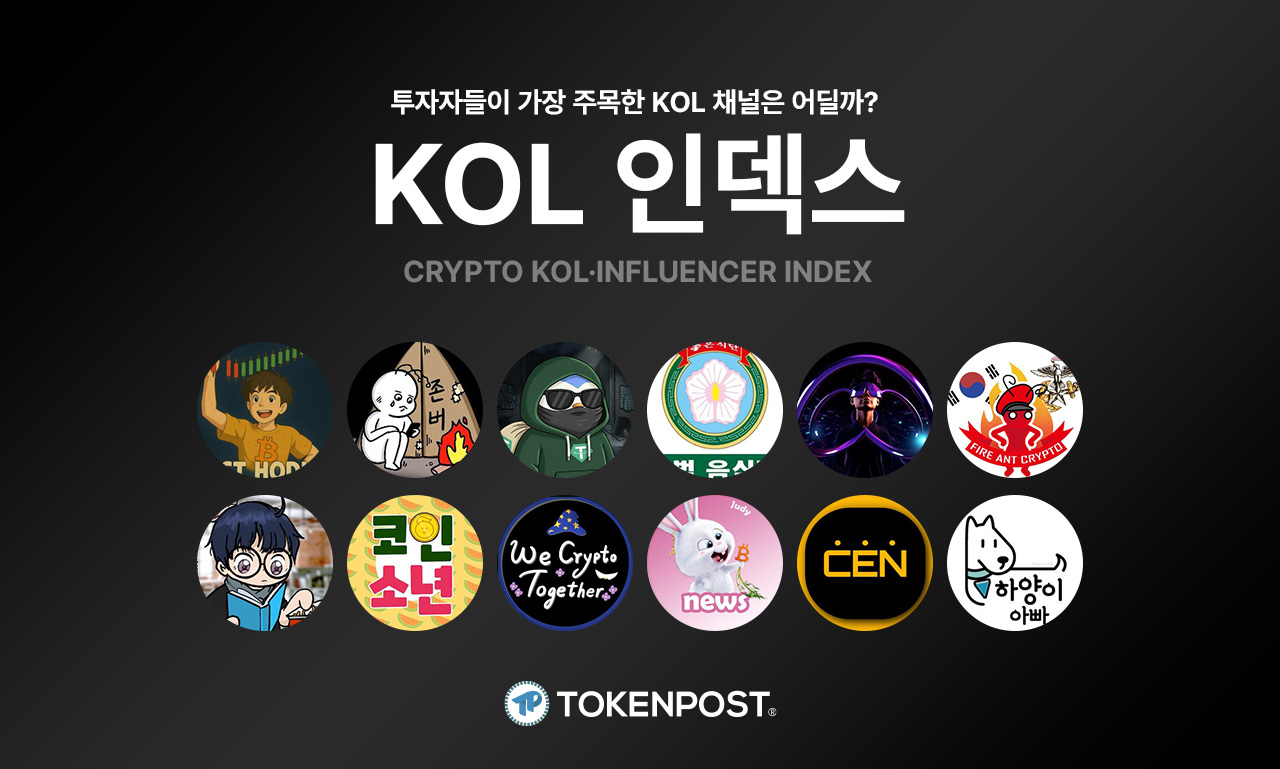
The findings come from the latest “KOL Index,” a weekly market-sentiment series built on community analytics by TokenPost and DataMaxiPlus that tracks which crypto topics and channels gain the most traction among Korean-speaking investors on Telegram. The latest edition points to a sharp rise in attention around U.S. legislation, tokenization pilots tied to major financial institutions, and broader macro headlines that shape risk appetite.
At the center of discussion was congressional debate over the U.S. “Clarity Act,” a proposal framed by supporters as a step toward clearer definitions of regulatory jurisdiction and market structure for digital assets. While the Index does not measure legislative odds, the surge in community engagement underscores how strongly traders link regulatory clarity to ‘liquidity inflow’ and renewed participation by large institutions—especially for exchanges, market makers, and token issuers navigating compliance uncertainty.
Tokenization also ranked among the most shared themes, fueled by reports of pilot initiatives involving major U.S. financial players including JPMorgan Chase ($JPM), Goldman Sachs ($GS), and BlackRock ($BLK). Community discussions highlighted experiments that bring U.S. equities and Treasury exposure onto blockchain-based rails—an approach advocates say could shorten settlement cycles and broaden access, but which also raises questions about market plumbing, custody standards, and the extent to which tokenized assets remain dependent on traditional intermediaries.
International policy developments provided additional momentum. Russian moves toward formalizing crypto-related legislation drew high readership, reflecting the market’s sensitivity to how large jurisdictions position digital assets within domestic financial systems—whether as regulated investment instruments, payment-like tools, or tightly controlled alternatives.
Beyond pure crypto narratives, macroeconomic and cross-market signals were actively circulated. Telegram channels closely tracked the U.S. Producer Price Index (PPI), corporate earnings, and shifting flows into Bitcoin (BTC) products, treating each as a proxy for how long restrictive financial conditions might persist. Traders also shared updates on Visa ($V) expanding stablecoin-related services—another datapoint reinforcing the view that stablecoins, despite ongoing regulatory debates, are becoming embedded in ‘payments infrastructure’ and treasury operations.
Other widely discussed catalysts included the competitive race in AI and semiconductors—often referenced for its influence on tech equity sentiment—and geopolitical risk in the Middle East, which community members viewed as a potential driver of volatility across energy markets, inflation expectations, and crypto correlations with broader risk assets.
The Index’s channel rankings were led by “Telegram Coin Room/Channel – CEN,” which placed first overall with a score of 87.34, supported by strong subscriber growth, consistent content output, and high engagement. “Byun Chang-ho Coin Academy (BCH)” ranked second (86.11), buoyed by heavy content production and cumulative views, while “Coin Boy’s Crypto Story” came third (82.45), standing out for participation and reaction metrics.
In the broader top 10, channels focused on airdrops and deal-flow style updates maintained strong visibility, reflecting ongoing retail interest in early-stage token opportunities even as discussion shifts toward regulation and tokenized finance. The Index also highlighted “Haedal’s Investment Info Sharing” as the top channel by average views (4,327 per post), suggesting that fewer posts with higher perceived utility can outperform high-frequency publishing in reach efficiency.
Subscriber growth was dominated by “Bulgaemi CRYPTO,” which added 87,268 subscribers over the period tracked, far surpassing peers. “CEN” added 57,847, reinforcing its top overall rank, while “Dokgodai Investment Club” posted the third-largest increase at 3,577—smaller in absolute terms but notable relative to its base.
Taken together, the week’s Telegram discourse points to a market increasingly shaped by the intersection of regulation, tokenization experiments, and macro data. For global investors watching sentiment indicators, the message from Korean crypto communities is clear: the next major narratives are likely to be forged not only in token markets, but also in legislatures, payment networks, and the systems that connect traditional finance to blockchain rails.
🔎 Market Interpretation
{
“core_narrative”: [
“Korean Telegram crypto discourse concentrated on ‘institutionalization’—a convergence of U.S. policy (regulatory clarity) and Wall Street tokenization pilots.”,
“Community attention rose around the U.S. ‘Clarity Act,’ implying traders view regulatory definitions (jurisdiction/market structure) as a prerequisite for institutional liquidity and broader participation.”,
“Tokenization pilots involving major U.S. financial institutions (JPMorgan, Goldman Sachs, BlackRock) reinforced expectations that traditional finance exposure (equities/Treasuries) may increasingly move onto blockchain rails.”
],
“sentiment_drivers”: [
“Regulation as a liquidity lever: Telegram engagement suggests traders link clearer rules with exchange/market-maker/token-issuer confidence and capital inflows.”,
“Macro as a risk switch: PPI, earnings, and flows into BTC products were treated as real-time indicators for how long tight financial conditions may persist.”,
“Payments adoption narrative: Visa’s stablecoin service expansion was interpreted as stablecoins embedding into payments infrastructure and corporate treasury operations despite unresolved regulation.”,
“Exogenous volatility catalysts: AI/semiconductor competition and Middle East geopolitical risk were widely cited as drivers of cross-asset volatility and crypto’s correlation to risk assets.”
],
“what_the_data_represents”: [
“The ‘KOL Index’ reflects topic traction and channel engagement among Korean-speaking investors on Telegram; it signals attention intensity rather than predicting legislative outcomes or price direction.”,
“Channel rankings and subscriber growth highlight where narratives are amplified and which formats (high-frequency vs high-utility posts) maximize reach.”
]
}
💡 Strategic Points
{
“for_traders_and_investors”: [
{
“point”: “Track regulatory milestones like the U.S. Clarity Act as potential volatility catalysts.”,
“why_it_matters”: “Community behavior indicates rule clarity is treated as a trigger for institutional re-engagement (liquidity, listings, market-making depth).”,
“watchlist”: [
“Committee hearings, amendments, and agency-jurisdiction language”,
“Statements from exchanges, broker-dealers, custodians, and stablecoin issuers”
]
},
{
“point”: “Separate ‘tokenization narrative’ from ‘tokenization reality.’”,
“why_it_matters”: “Pilots can lift sentiment quickly, but market structure constraints (custody, settlement finality, intermediaries) determine whether gains are durable.”,
“due_diligence_checks”: [
“Is the asset truly on-chain or a wrapped/IOU representation?”,
“Who controls custody and transfer permissions?”,
“Interoperability with existing clearing/settlement and compliance systems”
]
},
{
“point”: “Use macro releases (PPI) and earnings as proxies for crypto risk appetite.”,
“why_it_matters”: “Telegram channels treated macro data as a leading indicator of restrictive conditions, affecting BTC product flows and broader positioning.”,
“practical_playbook”: [
“Map inflation surprises to rate-cut expectations and BTC ETF/product flow reactions”,
“Monitor correlation regime shifts (crypto vs tech equities vs energy/inflation hedges)”
]
},
{
“point”: “Stablecoin infrastructure news (e.g., Visa) is a medium-term adoption signal.”,
“why_it_matters”: “Payments and treasury integration can expand real economy usage, potentially stabilizing demand beyond speculative cycles.”,
“monitor”: [
“Partnership announcements with banks/fintechs”,
“Settlement volume and supported networks”,
“Regulatory framing for stablecoin reserves and issuance”
]
}
],
“for_content_and_community_operators”: [
{
“point”: “Engagement winners combined growth + consistency + reactions.”,
“evidence_from_index”: [
“‘Telegram Coin Room/Channel – CEN’ ranked #1 (87.34) with strong subscriber growth and engagement”,
“‘Byun Chang-ho Coin Academy (BCH)’ ranked #2 (86.11) supported by heavy output and cumulative views”,
“‘Coin Boy’s Crypto Story’ ranked #3 (82.45) driven by participation/reaction metrics”
]
},
{
“point”: “Reach efficiency can beat posting volume.”,
“evidence_from_index”: “‘Haedal’s Investment Info Sharing’ led in average views (4,327 per post), implying fewer high-utility posts can outperform high-frequency publication.”,
“action”: [
“Prioritize actionable summaries: regulation + tokenization + macro calendars”,
“Use ‘explainers’ to convert complex policy/market plumbing into tradable implications”
]
}
],
“channel_momentum_signals”: [
{
“signal”: “Subscriber growth as narrative pull”,
“standouts”: [
“Bulgaemi CRYPTO: +87,268 subscribers (largest gain)”,
“CEN: +57,847 (reinforcing top rank)”,
“Dokgodai Investment Club: +3,577 (notable relative to base)”
]
},
{
“signal”: “Retail remains opportunity-seeking”,
“detail”: “Airdrop/deal-flow channels stayed visible in the top 10, showing early-stage token interest persists even as the main narrative shifts to regulation and tokenized finance.”
}
]
}
📘 Glossary
{
“terms”: [
{
“term”: “Institutionalization (of crypto)”,
“definition”: “A shift where regulatory frameworks, large financial institutions, and mainstream infrastructure increasingly shape crypto market participation and product design.”,
“why_it_matters”: “Often associated with deeper liquidity, stricter compliance, and closer coupling to macro markets.”
},
{
“term”: “Clarity Act”,
“definition”: “A referenced U.S. legislative proposal aimed at clarifying regulatory jurisdiction and market structure rules for digital assets.”,
“why_it_matters”: “Perceived to reduce compliance uncertainty for exchanges, market makers, and token issuers—potentially influencing institutional inflows.”
},
{
“term”: “Tokenization”,
“definition”: “Representing real-world or traditional financial assets (e.g., equities, Treasuries) as blockchain-based tokens.”,
“why_it_matters”: “Can potentially improve settlement speed and accessibility, but may still rely on traditional intermediaries, custody, and legal enforcement.”
},
{
“term”: “Market plumbing”,
“definition”: “The operational infrastructure of financial markets—clearing, settlement, custody, collateral management, and transfer rules.”,
“why_it_matters”: “Determines whether tokenized assets deliver real efficiency gains versus being cosmetic wrappers.”
},
{
“term”: “Stablecoin”,
“definition”: “A crypto token designed to maintain a stable value (often pegged to a fiat currency like USD) and used for payments/settlement.”,
“why_it_matters”: “Increasingly positioned as a bridge between crypto networks and traditional payments/treasury processes.”
},
{
“term”: “PPI (Producer Price Index)”,
“definition”: “A U.S. inflation indicator measuring price changes received by domestic producers.”,
“why_it_matters”: “Influences interest-rate expectations and risk appetite, impacting capital flows into BTC and other risk assets.”
},
{
“term”: “BTC products/flows”,
“definition”: “Capital moving into or out of Bitcoin-linked investment vehicles (e.g., ETFs or other structured products).”,
“why_it_matters”: “Often used as a real-time gauge of institutional/retail demand and sentiment.”
}
]
}