- South Korea seeks legal authority to seize self-custodied crypto through updated criminal procedures.
- Proposed warrants must detail wallet addresses, asset amounts, transfers, and secure custody arrangements.
- Court-supervised joint wallets could reduce theft risks while improving seized crypto asset protection.
South Korean tax officials have proposed changes to the country’s criminal law to establish clear procedures for seizing self-custodied cryptocurrency wallets during investigations. The proposal aims to address legal gaps surrounding digital assets controlled directly through private keys while introducing stricter warrant requirements and court-supervised custody measures.
Proposal Targets Legal Gaps in Self-Custodied Crypto Seizures
Officials from South Korea’s National Tax Service (NTS) have called for amendments to the Criminal Procedure Act to support the lawful seizure of self-custodied digital assets. The proposal was outlined in a research paper published in the June edition of Criminal Policy Research, a journal of the Korea Institute of Criminology and Justice.
The paper was authored by four officials, including NTS investigation team leader Jang Hee-won. It argues that existing criminal procedures were designed for physical property and do not adequately address blockchain-based assets controlled through private keys.
Self-custodied cryptocurrencies differ from assets held on centralized exchanges because owners retain exclusive control over their wallets.
Hardware wallets and software wallets are common examples. Consequently, investigators cannot simply freeze or seize these assets through an exchange.
The authors referenced South Korea’s Supreme Court Decision 2025Mo45, issued in December 2025, which ruled that authorities lawfully seized Bitcoin held in exchange wallets.
However, they stated that the ruling did not establish practical procedures for confiscating cryptocurrencies stored in personal wallets.
According to the paper, simply obtaining a private key may not guarantee control over digital assets because wallet owners could possess duplicate access credentials.
As a result, investigators may struggle to prevent suspects from transferring funds before authorities secure them.
The researchers also argued that Article 120 of the Criminal Procedure Act lacks specific rules covering wallet addresses, transfer procedures, storage methods, and custody arrangements for blockchain assets.
Officials Recommend Court-Supervised Crypto Custody
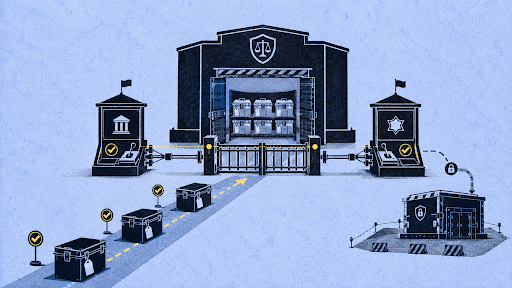
To close these legal gaps, the paper recommends creating dedicated provisions governing the execution of seizures involving self-custodied cryptocurrencies.
Under the proposal, warrants would need to specify the type and quantity of digital assets, verified wallet addresses, destination addresses, transfer methods, and post-transfer storage procedures whenever private keys remain under a suspect’s control.
The researchers also proposed transferring seized assets into wallets jointly managed by courts and investigative agencies instead of addresses controlled by a single authority. They argued this approach would reduce risks of theft, unauthorized access, and misuse.
Additionally, courts could authorize temporary transfers to designated addresses whenever immediate movement into joint custody proves impractical or investigators believe suspects may quickly dispose of their assets.
The recommendations follow broader efforts by South Korean authorities to strengthen digital asset custody procedures after a February security incident exposed a wallet recovery phrase in an official government release.
The breach resulted in unauthorized transfers of approximately $4.8 million in seized cryptocurrency, prompting the NTS to review custody practices and consider stronger legal safeguards for future investigations.